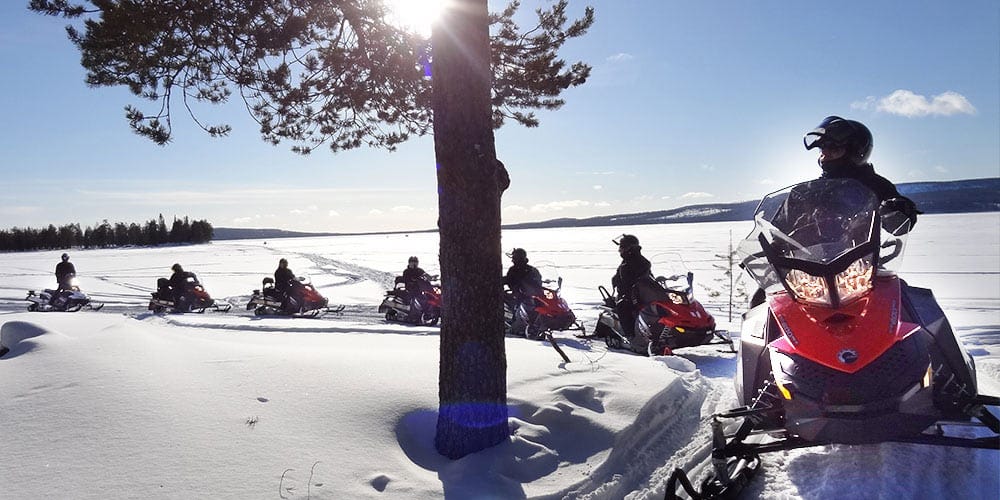
Visiting Rovaniemi in winter means embracing a snow-covered Arctic wonderland with dog sledding, reindeer safaris, and Northern Lights chasing. Visiting in summer means long, bright nights, lush forests, and wildlife encounters under the Midnight Sun. The two seasons offer completely different experiences, and the right choice depends entirely on what kind of adventure you are looking for. Below, we break down everything you need to know to decide when to go.
What activities can you do in Rovaniemi in winter?
Rovaniemi in winter offers some of the most iconic Arctic experiences in the world. From late November through March, the landscape transforms into a deep-snow wilderness where you can ride snowmobiles across frozen lakes, mush husky teams through pine forests, join reindeer safaris with local herders, and hunt for the Northern Lights on dedicated evening tours. Winter is the season that puts Lapland on the global map.
The range of Rovaniemi winter activities is broad enough to fill a week without repeating yourself. Ice fishing on a frozen river, snowshoeing through old-growth forest, and visiting Santa Claus Village are all popular options. For families, the festive atmosphere from December onward adds a magical layer that is hard to replicate anywhere else on Earth.
We run small-group snowmobile tours, husky trips, and reindeer safaris throughout the winter season, keeping group sizes intentionally small so every guest gets genuine time in the wilderness rather than a conveyor-belt experience. If you want to explore Rovaniemi’s full winter programme, we have options tailored to solo travelers, couples, and larger groups alike.
What can you do in Rovaniemi in summer?
Rovaniemi in summer is defined by the Midnight Sun, which keeps the sky bright around the clock from late May through mid-July. Summer activities include hiking and trekking through Lapland’s national parks, canoeing and kayaking on the Kemijoki and Ounasjoki rivers, berry and mushroom picking, and fly fishing for Arctic grayling and salmon. The pace is slower and the light is extraordinary.
One of the most distinctive summer experiences in the region is the Moose Spotting Safari. Moose are the largest wild animals in Europe, and spotting them in their natural habitat during the long summer evenings is genuinely thrilling. We offer these safaris as a signature summer experience, and they attract wildlife enthusiasts from across the world.
Summer Lapland also appeals to cyclists, nature photographers, and anyone who wants to experience the Arctic without cold temperatures. Average summer highs in Rovaniemi sit comfortably between 15 and 22 degrees Celsius, making outdoor exploration pleasant and accessible for all fitness levels.
How does the weather differ between Rovaniemi’s winter and summer?
Rovaniemi’s winter and summer seasons are dramatic opposites. Winter temperatures regularly fall between minus 10 and minus 25 degrees Celsius, with snowfall beginning in November and lasting until April. Summer temperatures are mild, typically ranging from 15 to 22 degrees Celsius in June and July, with very little rainfall and almost continuous daylight during the peak Midnight Sun period.
Autumn and spring are short transitional seasons. September brings the first frosts and stunning golden foliage known locally as ruska. May is a shoulder month when snow is melting and rivers are running high. Neither season offers the full drama of winter or summer, but both have their own quiet appeal for travelers who prefer fewer crowds.
Packing correctly is essential for either season. In winter, layering is critical since temperatures can drop sharply after dark. In summer, light, breathable clothing works well during the day, but evenings can still be cool, so a mid-layer is always worth bringing.
Which season is better for seeing the Northern Lights in Rovaniemi?
The Northern Lights are visible in Rovaniemi from late August through mid-April, when the nights are dark enough to see them. Winter, specifically the months of December through March, offers the longest dark windows each night and therefore the highest probability of a sighting. The Northern Lights cannot be seen during summer because the Midnight Sun keeps the sky too bright.
Clear skies and low light pollution are the two factors that matter most for a successful Northern Lights experience. Rovaniemi sits well above the Arctic Circle, which means it is positioned within the auroral oval where geomagnetic activity is strongest. This makes it one of the most reliable destinations in Europe for Aurora Borealis sightings.
Our Northern Lights tours run from August 21st through April 21st, taking small groups away from city light pollution to maximize visibility. Patience is part of the experience since the Aurora is a natural phenomenon and cannot be guaranteed, but heading out with knowledgeable local guides significantly improves your chances of seeing it.
Should you visit Rovaniemi in winter or summer?
You should visit Rovaniemi in winter if your priorities are the Northern Lights, snow-based activities, and the iconic Arctic atmosphere. You should visit in summer if you want the Midnight Sun, wildlife encounters, warmer temperatures, and a quieter, more contemplative experience in nature. Both seasons are genuinely rewarding, and the better choice is simply the one that matches what you want to feel and do.
Winter draws larger crowds, particularly in December and February, so booking accommodation and activity packages well in advance is important. Summer offers more flexibility and a noticeably calmer atmosphere, though popular hiking routes and fishing spots can still fill up quickly in July.
For travelers who cannot decide, late August and early September are an interesting compromise. The first Northern Lights of the season begin to appear, the summer warmth lingers, the forests turn golden, and visitor numbers are lower than at peak times. It is one of Lapland’s best-kept seasonal secrets.
Whatever season draws you in, the experience of Rovaniemi is shaped as much by how you travel as by when you travel. Small-group tours with local guides, time spent in genuine wilderness, and the freedom to slow down and absorb the landscape are what make the difference between a holiday and a memory that stays with you.