Finnish Lapland is home to a remarkable range of Arctic wildlife, and a guided nature safari gives you a genuine chance to encounter animals in their natural habitat. On a wildlife safari in Lapland, you can expect to see moose, reindeer, Arctic foxes, lynx, wolverines, and a wide variety of northern birds. The specific animals you encounter depend on the season, the location, and how quietly and patiently your group moves through the wilderness.
Missing wildlife in Lapland is easier than you think without local knowledge
Most visitors who try to spot animals in Lapland on their own come away disappointed. Arctic animals are cautious, well camouflaged, and active at hours that don’t match a typical tourist schedule. Without knowing which terrain to look in, which trails to avoid, and when to be completely silent, you can walk through prime habitat and see nothing at all. A local guide who reads the land daily changes that entirely. They know where moose feed at dusk, where reindeer gather before a storm, and how to position a group so the wind doesn’t carry your scent ahead of you.
Visiting at the wrong time of year is holding back your wildlife experience
Lapland’s wildlife calendar is specific, and arriving outside the right window for a particular animal means you’re likely to miss it. Moose are most visible in summer and early autumn, when vegetation is lower and animals are active in open areas. Winter brings different rewards: reindeer are easier to spot against the snow, and nocturnal species such as the Arctic fox are more active. Choosing your travel dates around what you actually want to see, rather than a general “Lapland season,” is the single most effective step you can take before you book.
What wildlife can you actually see on a nature safari in Lapland?
On a guided wildlife safari in Lapland, you can realistically see moose, reindeer, Arctic foxes, brown bears, wolverines, lynx, and a range of Arctic birds, including the golden eagle, Siberian jay, and ptarmigan. The animals present vary by season, but Lapland’s wilderness supports one of the most diverse wildlife populations in northern Europe year-round.
Moose are the largest wild animals in Europe and a genuine highlight of any summer safari. Reindeer roam freely across Finnish Lapland and are visible in almost every season. In winter, the white landscape makes it easier to spot tracks and movement, which is how skilled guides locate wolverines and Arctic foxes that would otherwise remain invisible. Brown bears are present but naturally elusive; sightings do happen, though they are never guaranteed.
Birdlife in Lapland is often overlooked but genuinely impressive. The taiga forests hold species rarely seen elsewhere in Europe, and during spring and summer, migratory birds arrive in large numbers. A knowledgeable guide will point out species most visitors walk past without noticing.
When is the best time to spot wildlife in Finnish Lapland?
The best time to spot wildlife in Finnish Lapland depends on which animals you want to see. Summer, from June through August, offers the best moose sightings. Winter, from November through March, is ideal for reindeer, Arctic foxes, and birds of prey against the snow. Spring and autumn are excellent transitional periods with high animal activity.
Summer evenings are particularly productive for moose spotting because animals move into open areas to feed and escape insects. The midnight sun means you have light at all hours, which significantly extends your window for observation. Moose are most active around dusk and dawn, even when those times blur together in June.
Winter safaris offer a completely different kind of wildlife experience. Fresh snow reveals tracks that tell a story of the night’s activity, and guides can follow wolverine or lynx trails to areas where recent sightings are likely. The cold also keeps animals closer to food sources, making their movements more predictable. If your priority is the Northern Lights alongside wildlife, the period from late August through April offers the best combination of both.
How does a guided wildlife safari in Lapland actually work?
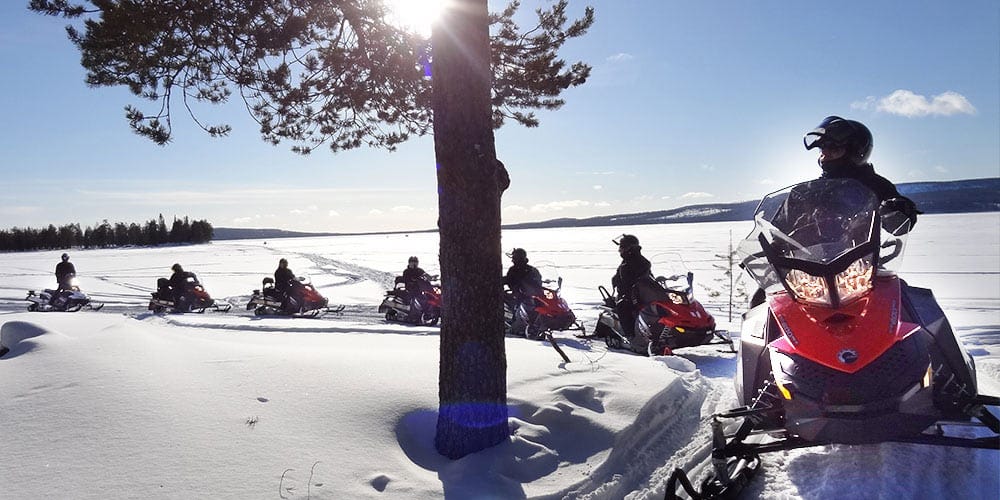
A guided wildlife safari in Lapland typically begins in the late afternoon or evening, when animal activity peaks. Groups are kept small to minimize disturbance. The guide leads the group through preselected terrain on foot, by vehicle, or by snowmobile in winter, stopping frequently to observe tracks, listen for movement, and position the group for the best chance of a sighting.
- The guide briefs the group on animal behavior, what to look for, and how to move quietly through the terrain.
- The group travels through habitat chosen based on recent sightings and seasonal patterns.
- When an animal is spotted, the guide positions the group at a safe, non-disruptive distance for observation and photography.
- The guide explains what the animal is doing, why it’s there, and what the surrounding environment reveals about its habits.
- The safari concludes with time to ask questions and often includes a warm drink or light refreshment in the wilderness.
Small group sizes are essential to this experience. When a group is too large, animals hear you coming and move away before you arrive. Keeping numbers low means the wilderness stays quiet, which is the single biggest factor in whether you actually see anything. We keep our groups deliberately small for exactly this reason.
What is the best way to see moose in Lapland?
The best way to see moose in Lapland is on a dedicated evening safari led by a local guide who knows the animals’ feeding routes and seasonal patterns. Moose spotting in Lapland is most successful in summer and early autumn, when animals are visible in open terrain and the long daylight hours extend your observation window.
Moose are the largest wild animals in Europe, and seeing one in its natural habitat is a genuinely striking experience. They can weigh up to 700 kilograms and stand nearly two meters at the shoulder, yet they move through the forest with remarkable quiet. Finding them requires knowing where they feed, where they rest, and which routes they use between the two.
Our Moose Spotting Safaris are specifically designed around these patterns, taking small groups into terrain where moose are most reliably active. Going out independently without this local knowledge significantly reduces your chances of a sighting, even in areas with healthy moose populations. The guide’s ability to read the land, interpret fresh tracks, and position the group correctly makes the difference between seeing a moose and driving home with nothing but a story about footprints.
What wildlife is unique to the Arctic environment of Lapland?
Several species found in Lapland are either unique to, or strongly associated with, the Arctic and subarctic environment. The Arctic fox, wolverine, and reindeer are the most iconic. The Siberian flying squirrel, rough-legged buzzard, and snowy owl are also species you won’t easily find outside northern latitudes.
The Arctic fox is perhaps the most visually striking of Lapland’s unique species. Its coat shifts from brown in summer to white in winter, providing camouflage in both seasons. Wolverines are rarely seen but leave clear evidence of their presence through tracks and territorial markings. They are powerful predators capable of taking down animals much larger than themselves, and their presence signals a healthy, intact ecosystem.
Reindeer in Finnish Lapland occupy a unique position: they are semi-domesticated but roam freely across vast areas of wilderness. Unlike fully wild caribou populations elsewhere, Finnish reindeer are owned by local herding families and have been central to Sámi and Finnish Lapland culture for centuries. Encountering a herd moving across a snow-covered fell is one of those Arctic wildlife moments that stays with you.
The birdlife of Lapland also includes species that occur nowhere else in Europe in such numbers. The Siberian jay, known locally as the “camp robber” for its boldness around humans, is a taiga specialist. Seeing one land on a guide’s outstretched hand in a winter forest is a small but memorable wildlife encounter that requires no special luck at all.
How do guided safaris protect Lapland’s wildlife and nature?
Guided safaris protect Lapland’s wildlife by controlling group size, managing approach distances, choosing routes that avoid sensitive habitats, and educating visitors on responsible behavior. A professional guide acts as a buffer between curious travelers and wild animals, ensuring that encounters don’t cause stress, disrupt breeding, or damage habitats over the long term.
Unguided wildlife tourism carries real risks for Arctic ecosystems. Visitors who don’t know the terrain can inadvertently disturb nesting sites, approach animals too closely, or leave trails that degrade sensitive vegetation. The Arctic environment recovers slowly from disturbance, which makes responsible access particularly important in Lapland compared to more temperate regions.
We are a member of the Sustainable Travel project in Finland, which reflects a genuine commitment to operating in ways that preserve the environment we work in. This isn’t a marketing position; it’s a practical reality. The wilderness is what makes these safaris worth taking, and protecting it is the only way to keep offering authentic Arctic wildlife experiences to future visitors. Responsible guiding, small groups, and genuine respect for animal behavior are built into how we operate, not added as an afterthought.