Rovaniemi is the official hometown of Santa Claus because it sits directly on the Arctic Circle in Finnish Lapland, and Santa Claus Village was officially established there in 1985. The city has been internationally recognized as Santa’s permanent residence, supported by the Finnish government, tourism authorities, and decades of global visitor tradition. Below, we unpack the history, the geography, the attractions, and everything you need to plan your own visit.
How did Rovaniemi become the official home of Santa Claus?
Rovaniemi became the official home of Santa Claus through a combination of Finnish folklore, a famous 1984 visit by Eleanor Roosevelt, and the deliberate establishment of Santa Claus Village on the Arctic Circle in 1985. Finland had long claimed Santa as a Finnish resident, and the opening of that village gave the story a permanent, physical address that the world could visit.
The roots of the connection go back even further. Finnish radio had been broadcasting Santa’s home as Lapland since the 1920s, telling children that Santa lived on Korvatunturi, a fell near the Russian border. Over time, Rovaniemi became the practical gateway to that mythology, partly because it was the most accessible city in Finnish Lapland and partly because of its dramatic Arctic landscape.
The real turning point came in 1984 when Eleanor Roosevelt visited Rovaniemi and was welcomed at the Arctic Circle, a moment that captured international attention and planted the seed for a permanent Santa experience. The following year, a small cabin was built on the Arctic Circle line, and Santa Claus Village gradually grew from there into the internationally known destination it is today. Finland’s tourism industry and the Finnish government have both actively supported Rovaniemi’s identity as Santa’s official hometown, giving it a legitimacy that no other city in the world has matched.
What is the Arctic Circle, and why does it matter for Santa’s home?
The Arctic Circle is an imaginary line at approximately 66.5 degrees north latitude, marking the boundary where the sun does not set on the summer solstice and does not rise on the winter solstice. It matters for Santa’s home because Rovaniemi sits directly on this line, giving the city a genuinely magical geographic identity that reinforces the idea of a world apart from everyday life.
Crossing the Arctic Circle is itself a symbolic moment for visitors. When you step over that line in Rovaniemi, you are entering a place where natural phenomena like the Midnight Sun and the Northern Lights are part of everyday life. The extreme seasons, the deep winter darkness, the snow-covered forests, and the vast silence all contribute to an atmosphere that feels genuinely otherworldly and perfectly suited to the legend of Santa Claus.
The Arctic Circle also carries practical significance. It means Rovaniemi reliably receives snow from November through April, that reindeer roam the surrounding landscape, and that the Northern Lights are visible on clear nights from late August through April. These are not stage-managed details. They are real features of the Arctic environment that make the Santa Claus story feel lived-in rather than invented.
What can visitors actually do at Santa Claus Village in Rovaniemi?
Visitors to Santa Claus Village in Rovaniemi can meet Santa Claus in person, cross the official Arctic Circle line, send letters with an Arctic Circle postmark, go on reindeer and husky safaris, ride snowmobiles, and experience the Northern Lights. The village operates year-round, though the winter season from November to April offers the fullest range of activities.
Winter experiences
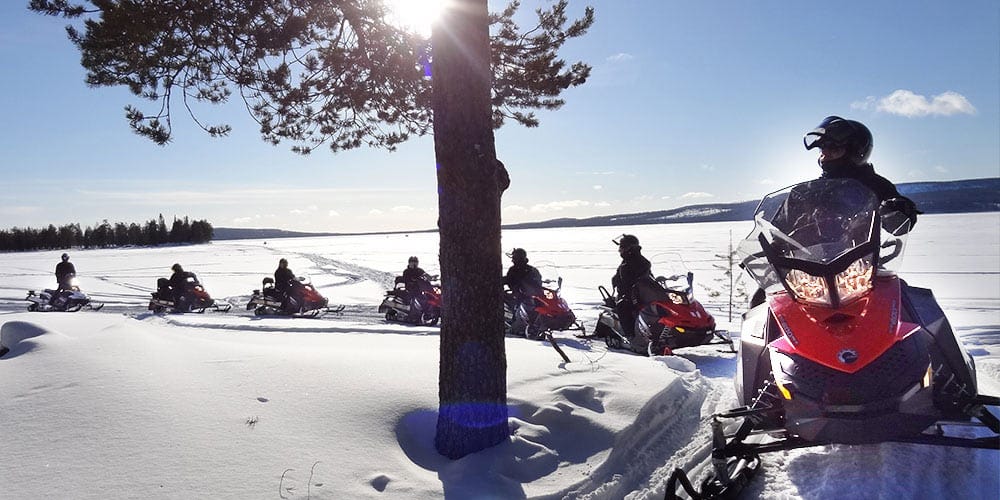
Winter is when Santa Claus Village comes fully alive. Snowmobile tours take you deep into the forest, husky sleds pull you across frozen lakes, and reindeer safaris offer a slower, more traditional way to move through the snowy landscape. Northern Lights tours run from late August through April, with guided excursions heading away from city lights to maximize your chances of seeing the aurora. The village itself is lit with warm lights against the snow, creating an atmosphere that genuinely feels like stepping into a Christmas story.
Summer experiences
Summer in Rovaniemi brings the Midnight Sun, when daylight lasts around the clock. The village is open, Santa is still available for meetings, and the surrounding landscape transforms into lush green forest. Moose spotting safaris become a highlight of the warmer months, offering the chance to see Europe’s largest wild animals in their natural habitat. Fishing, hiking, and river activities round out the summer program.
We at Lapland Welcome are based in Rovaniemi and offer guided experiences across Rovaniemi in both winter and summer, with small groups so every visitor gets real time in the landscape rather than a rushed tour.
Is Rovaniemi the only place in the world that claims to be Santa’s home?
No, Rovaniemi is not the only place that claims a connection to Santa Claus, but it is the only officially recognized hometown. Other locations, including Drøbak in Norway, North Pole in Alaska, and various towns in Sweden, have their own Santa traditions, but none hold the same level of international recognition or have a purpose-built village dedicated to the identity.
What sets Rovaniemi apart is the combination of official recognition and physical infrastructure. Finland’s government and tourism bodies have formally backed the claim, Santa Claus Village exists as a real, operating destination, and the city has invested decades in building a consistent global brand around the Santa identity. Other claimants tend to be local traditions or marketing efforts rather than internationally recognized designations.
There is also the question of atmosphere. Rovaniemi and the surrounding Finnish Lapland genuinely look and feel like the landscape most people imagine when they picture Santa’s home. The snow, the reindeer, the forests, the Northern Lights, and the Arctic silence are not constructed for tourism. They are simply what Lapland is, and that authenticity is difficult to replicate.
When is the best time to visit Rovaniemi to experience Santa’s hometown?
The best time to visit Rovaniemi as Santa’s hometown is between late November and early January, when snow is reliable, the Christmas atmosphere is at its peak, and the full range of winter activities is available. However, any time between November and April offers snow, Northern Lights, and the core Arctic experience that defines Rovaniemi’s Santa Claus identity.
December is the most popular month, particularly the weeks leading up to Christmas. The village is at its most festive, the snow is deep, and the short daylight hours give the landscape a dramatic, almost theatrical quality. Families with children often choose this period specifically because the Santa meeting feels most meaningful in the context of the Christmas season.
If you want to avoid the peak crowds while still experiencing winter, January and February are excellent alternatives. Snow conditions are often at their best, Northern Lights activity is strong, and the village is quieter. March brings longer days and better light for photography while still offering full winter conditions. For those drawn to the Midnight Sun and summer wildlife, June and July offer a completely different but equally memorable version of Rovaniemi. In 2026, whether you visit in the depths of winter or under the endless summer sun, Rovaniemi delivers an experience that genuinely earns its reputation as Santa’s official hometown.
Go beyond Santa Claus Village
Turn your visit into a complete Arctic day with guided Santa experiences and seasonal activities in Rovaniemi.